
 English
 中文简体
中文简体 русский
 Bahasa Melayu
How Can Buyers Balance Clarity and Processing Performance in Transparent PVC Film?
Transparent plastic film is used in a wide range of applications, including packaging, protective covers, document sleeves, display products, and flexible industrial components. Buyers often focus on visual clarity when comparing materials, but transparency alone does not determine whether a film is suitable for production. Thickness consistency, flexibility, surface quality, processing compatibility, and storage conditions can all influence the finished result. Understanding these factors before placing an order helps manufacturers and procurement teams choose a material that meets both appearance requirements and practical production needs.

Define the Required Level of Transparency
Not every application requires the same optical performance. A film used to display a product may need a clean, unobstructed view, while a protective cover may place greater emphasis on flexibility and resistance to everyday handling.
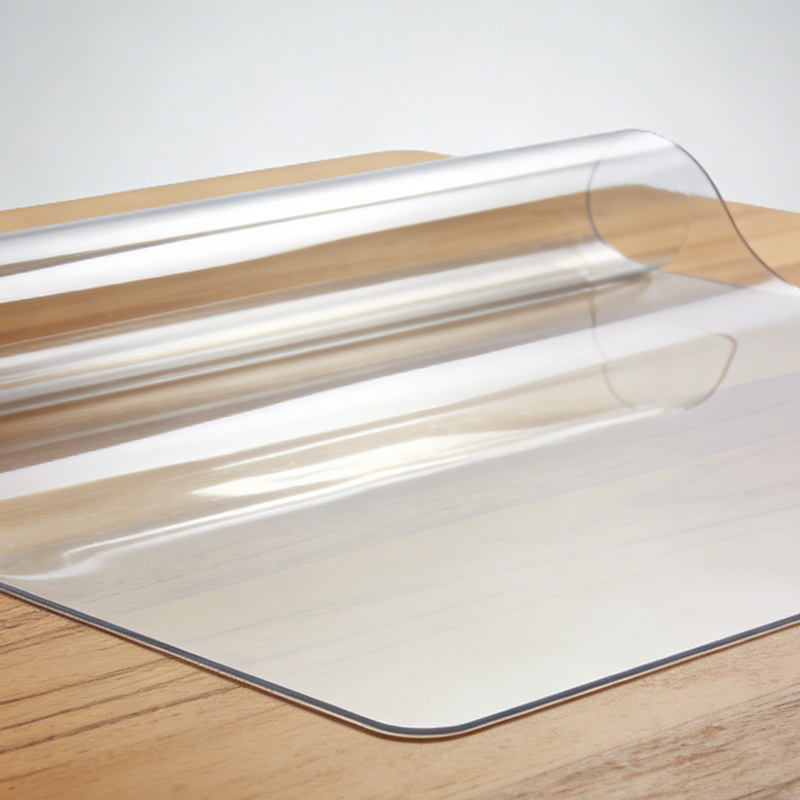
When evaluating PVC Super Clear Film, buyers should examine the material under lighting conditions similar to those of the intended application. Haze, surface marks, small particles, and uneven thickness may affect the visual result, depending on the product design and viewing environment.
It is also useful to clarify whether the film will be viewed directly, printed, laminated, or formed into a finished component. These requirements influence which material characteristics deserve the attention during sample approval.
Choose Thickness According to the Application
Film thickness affects flexibility, handling, forming behavior, and the level of support provided by the material. A thinner film may be suitable for flexible packaging or lightweight covers, while a thicker specification may be more appropriate when greater body or dimensional stability is required.
However, thickness should not be selected in isolation. Buyers need to consider the shape of the finished product, the expected handling conditions, the forming process, and the required level of flexibility.
Manufacturers can help compare available thickness options against these requirements. Confirming nominal thickness and acceptable variation before production also provides a clearer basis for quality inspection and repeat ordering.
Check Compatibility With Downstream Processing
A film that looks clear in its original roll may behave differently during cutting, sealing, printing, laminating, or forming. Processing temperature, equipment settings, tension, and contact with other materials can influence the finished appearance.
Before committing to a large order, buyers should test a representative sample using their actual production process. Relevant checks may include:
- Whether the film feeds smoothly through the equipment
- Whether cutting produces clean, consistent edges
- Whether printing or bonding achieves the required result
- Whether forming creates unwanted wrinkles or distortion
- Whether the finished product retains the intended transparency
These trials help identify compatibility issues early, when adjustments to the material specification or processing conditions are easier to evaluate.
Understand Flexibility and Surface Quality
Transparent film must often bend, fold, or conform to a particular shape. If its flexibility does not suit the design, the finished product may develop visible creases, resist forming, or become difficult to handle during assembly.
Surface quality is equally important. Scratches, embedded particles, uneven gloss, and handling marks can reduce the visual appeal of clear products, particularly where the film is intended to showcase the contents beneath it.
During sample evaluation, buyers should inspect both sides of the material and check how it behaves during normal handling. Manufacturers should also consider winding tension, surface protection, and handling procedures to help preserve appearance throughout production and packing.
Consider Formulation and Intended Use
PVC film can be formulated for different combinations of flexibility, processing behavior, and end-use requirements. The appropriate formulation depends on the application rather than on a general description such as clear or flexible.
Buyers should communicate whether the film will be used indoors or outdoors, whether it will contact other materials, and whether specific chemical, temperature, or regulatory requirements apply. Where relevant, suitability for the intended contact or exposure conditions should be confirmed from the material specification.
A manufacturer can then evaluate the requested properties and explain which options are feasible. This approach is more reliable than assuming that all transparent PVC films have the same performance characteristics.
Prevent Quality Problems During Storage and Transport
Storage conditions can influence how film performs when it reaches the production line. Excessive heat, direct sunlight, contamination, poor roll support, or rough handling may affect appearance or cause deformation, depending on the material construction and packaging.
Buyers should confirm recommended storage conditions, roll dimensions, core specifications, and packaging protection before shipment. Rolls should be handled in a way that limits crushing, surface contact, and unnecessary deformation.
For repeat orders, consistent labeling and batch identification can also make incoming inspection and inventory management easier, particularly when several thicknesses or formulations are purchased together.
Build a Clear Specification Before Ordering
Selecting a transparent film is a process of matching material properties to the finished product and its manufacturing route. Buyers should define the required transparency, thickness, width, flexibility, surface quality, processing method, and any application-specific requirements before approving a sample.
For a PVC Super Clear Film manufacturer, these details provide a practical foundation for material selection, production planning, and quality control. When buyers assess visual performance alongside processing compatibility and handling requirements, they can make more informed purchasing decisions and reduce avoidable adjustments during production.


Copyright © Dongyang Lishi Plastic Co., Ltd.
